The other morning, I went for a run. I’m training for a half-marathon (my first one ever – please send some positive vibes my way!), so some of my runs are getting progressively longer. This run, in particular, was pretty grueling. It was longer than I had gone in a long time, and included some steep hills that seemed to come out of nowhere. Why am I telling you about this? Because after this run, I learned yet another lesson about connecting the dots between my physical health and my mental wellbeing – and it’s a lesson I always benefit from.
Continue readingmental health
A Midsummer Daydream
Well, here we are: the dog days of summer. For a lot of people, this time of the year is the last gasp of doing something fun and exciting before the fall begins. For me, it’s a chance to take a deep breath and try and reset. Even though very good things are happening in my life, the summer has been anything but relaxing. At a time when things are winding down, I’m still looking for those lazy days where things are calmer and quieter.
Continue readingThe Challenge of Unintentional Assumptions
Today, I want to talk about assumptions. Assumptions are part of our daily life, and they can happen at any time. We make assumptions off the biggest and smallest of clues, and they can largely depend on our mood at the time. While they can be harmless, they can also lead us down a path that is challenging and confusing if we’re not careful. A very frustrating things about assumptions is how unintentional they can be. Without meaning or trying to, you can assume the worst, and that can change the trajectory of your day. But in the past few weeks, I’ve learned a few lessons about assumptions, and I’d like to share one today.
Continue readingStand-Up Comedy and Mental Health: An Interview with Drew Landry
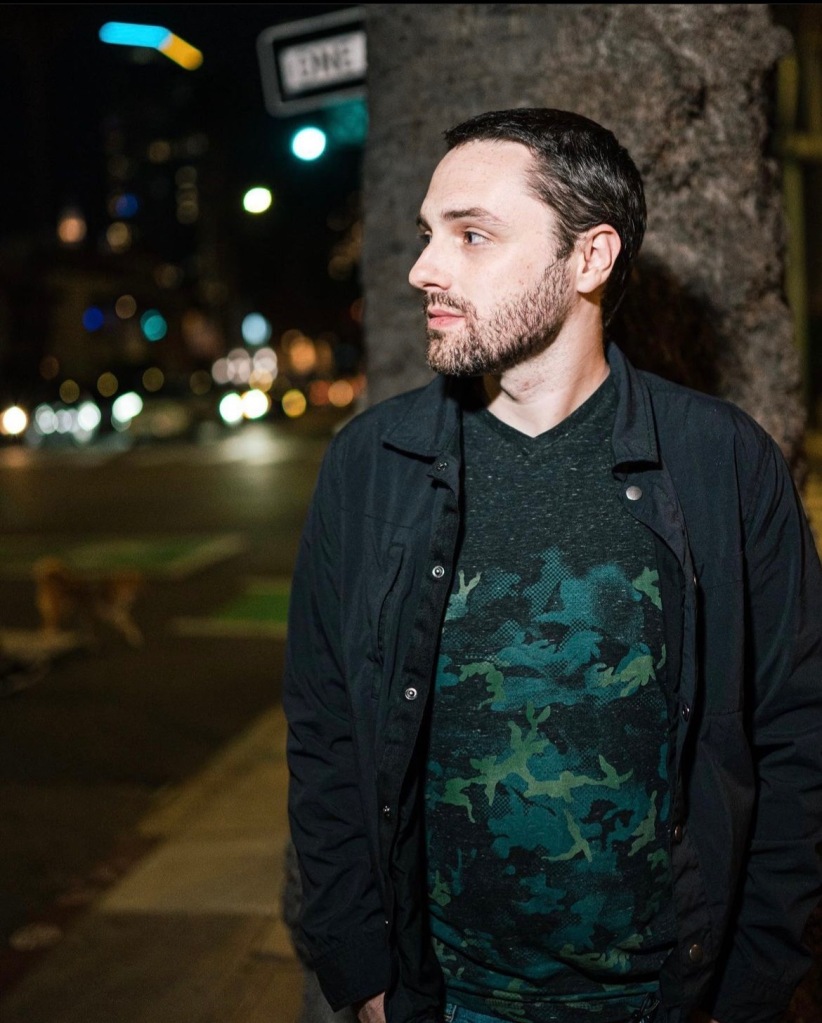
Today’s post is an interview with Drew Landry, a stand-up comedian and writer from Maryland, currently based in Los Angeles. Drew is very open and honest about mental health in his work. In this interview, we talked about his approach to comedy, mental health and his recent comedy special. Thanks for speaking with me, Drew!
First off, I wanted to ask you about your work. How did you get into stand-up comedy?
When I was a little kid I wanted to be a comedian, I had an SNL “Best of Chris Farley” DVD I would watch all the time. In middle school I watched a lot of stand-up on TV, like a lot of Comedy Central specials, and I wanted to try it, so when I was 13 I did stand-up at my middle school talent show. Obviously, I wasn’t good, but I immediately caught the bug and fell in love with doing it. So I started doing stand-up at this coffeehouse open mic near me every week. When I was 16 they started letting me perform in bars and comedy clubs.
Comedy can be a good outlet for our mental health – why do you think that is?
It’s a HUGE, annoying cliche to say this, and I hate that I’m gonna say it but I think it’s true, I think a lot of comedians are just really fucked up people. Whether it’s mental illness or addiction issues. And you kind of write jokes about the things that are on your mind, so if you’re struggling with mental health you’re naturally going to write jokes about it because it’s just a thing that you’re thinking about a lot. Obviously, it can go too far. You’ll see a lot of comics at open mics who just rant about their depression and don’t have punchlines, it’s exhausting to sit through. So your comedy can’t just be a therapy session, you still need to have jokes.
You have been open about living with bipolar disorder. How/Why do you incorporate that into your work?
I used to be really embarrassed about being bipolar, I kept it a secret. Then I realized how freeing it was to be open about it. It was a great feeling to go from “I can’t ever let anyone know I’m bipolar” to telling jokes about being bipolar onstage. It helped me get rid of that shame and embarrassment about it.
Congratulations on your recent comedy special, “All My Friends Are Dead.” This is a deeply personal set – how has making this impacted you, and what’s the response been like?
The responses have made me happy. I wanted it to be a tribute first and foremost, while still having constant punchlines and never feeling like a monologue or a one-man show, and I also really wanted it to be comfort food for anyone who’s going through grief. I can’t tell if I fully accomplished that but based on the responses I’ve gotten it seems like I did.
What is your personal approach to mental health? What do you do to maintain mental wellness?
Exercise is the biggest thing, even if it’s just a tiny bit of exercise, just being physically active, I think it makes a huge difference, at least for me.
What is your favorite thing about stand-up comedy?
It might be a boring answer but honestly, it’s just so fun to do There’s nothing more fun. The adrenaline rush, it’s just the best.
Drew Landry is a stand-up comedian and writer from Maryland, currently based in Los Angeles. He went on tour with Carlos Mencia two weeks after graduating high school, and he has also toured with Dana Gould and Iliza Shlesinger.
Landry performed at the Just For Laughs festival in Vancouver in 2022, and he hosts the monthly show Salty AF at the Hollywood Improv. He created and wrote the humor section for the popular hip-hop site DJBooth and has also written satire articles for the college website Total Sorority Move. His articles on Medium have received millions of views, including his 2017 piece “I Have a Theory That Donald Glover and Childish Gambino Are Secretly The Same Person” which went viral. He was recently named one of the top 50 Humor writers on Medium.
Five Tips for Reframing Should Statements
Earlier this week, I wrote about should statements, what they look like and what we can do about them. While writing the post, I realized I’ve learned a lot about should statements and should thinking, and how to manage it. That said, here are five helpful things to remember when you’re trying to reframe should statements.
Continue readingBreaking Down Mental Health Terms: What are Should Statements?
Over the years, I’ve learned a number of words, phrases and definitions that have helped me understand my own mental health. Some of these are connected to mental illness or medicine, while others are connected to mental wellness. In this recurring series, I break down some of the mental health terms I’ve learned over the years. Today, I’ll be breaking down should statements: what they are, what they look like and what we can do about them.
Continue readingInformed and Included: An Interview with NOWINCLUDED’s Tiffany Whitlow
Today’s post is an interview with Tiffany Whitlow, who is the co-founder of biotechnology research company Acclinate, and its associated community brand NOWINCLUDED – the online health community focused on empowering the Black community to make better-informed health decisions. In this interview, we talked about NOWINCLUDED, shrinking the stigma, and the importance of taking charge of your mental health. Thank you for talking with me, Tiffany!
While all communities experience mental health issues, the Black community suffers from an increased rate of mental health concerns. What is NOWINCLUDED doing to change this?
NOWINCLUDED is a community created by Black people for Black people to talk and learn about health issues that impact us, including mental health. Through NOWINCLUDED, our community members can have a safe space for them to discuss what’s going on with them, get support from people who can relate to them, and learn about opportunities and information that can help them be healthier. We’re also partnering with organizations like Prosper in Birmingham, Alabama, for example, to provide access to practical resources like virtual mental health groups, career matching services, and a community food bank because everything – having a person to talk to, a job to pay the bills, a place to get food for the family, etc. – can impact our community’s mental health.

Part of your work is to empower people to make better-informed mental health decisions. What are some of the most significant barriers to people receiving the care they need?
We want to empower the Black community to make better-informed decisions about their health in general, including mental health, because we know from our community members’ experiences and stories that mental health can be affected by everything that’s going on in your life. We also know from research that Black adults are more likely to have feelings of sadness, hopelessness, and worthlessness than white adults, and yet, only one in three Black adults with mental illness receive treatment. There could be several reasons for this, including cultural stigma (that seeking help is a sign of weakness), lack of mental health professionals who can understand Black people’s lived experiences without personal biases and support them effectively, and socioeconomic disparities (which can translate to real-life issues like not having health insurance or being able to afford therapy). So, we’re amplifying stories from our community members to show that it’s ok to be vulnerable with your health, we’re here to help you feel seen and heard, and we have resources that can help you (and the Black community in general) live healthier.
How do you work to shrink the stigma surrounding mental health?
In the Black community, some people might think of suffering in silence as having strength and speaking up and asking for help as weakness. There also might be some people who tell people that are experiencing mental health issues to “pray it away” or simply label them as “crazy.” But, the truth is that mental health issues are diagnosable and manageable, like any other health issues. So, we’re trying to reduce the stigma around mental health among our community and encourage people to be their own health advocates by sharing our community members’ stories – like in this video for example, where we discussed the impact of COVID-19 on the mental health of our community members.
On your website, you note that as little as 2% of the US population is currently a part of clinical trials, and only a fraction of that includes individuals from communities of color. How can better representation in clinical trials lead to better health care (specifically, mental health care)?
I think my story, as well as my co-founder Del Smith’s story, demonstrates how more inclusive clinical research can help improve the health of not just the Black community, but also communities of color at large. As a young mom, my son was diagnosed with asthma. When he was only an infant, I discovered that his asthma medication, which is widely used to prevent and treat wheezing and shortness of breath caused by asthma, was 47% less effective for Black people compared to white people. It was devastating and scary for me to learn that this treatment wasn’t providing the relief my son needed. I wouldn’t want any mother or person to go through the experience that my son and I did, and that’s what inspired me to create the NOWINCLUDED community, so that we can be informed and included in processes that affect our health.
When Black people and other people of color are included in clinical research, it can help researchers develop treatments that can potentially be more effective and safer for us – and this isn’t just limited to physical health issues like asthma, but mental health as well. As more researchers study the mental health challenges that Black people face, there’s more potential to have more effective tools and solutions for us. So, while it is completely up to each person in our community to make the decision to participate in clinical research or not, I encourage them to learn about what clinical research opportunities are out there and how our participation can help improve our community’s health.

NOWINCLUDED emphasizes communities of color “taking control of their mental health.” In your view, what does it mean for someone to take control of their mental health, and why is this important?
We want to empower our Black community and communities of color to take control of their health in general, mentally and physically, and that can look like different things. It can be learning about different disorders (including mental health disorders) even if you think you’d never have them – you can not only stay healthy by learning about how to prevent them, but also recognize them more quickly, hopefully, should you experience any symptoms. It can also be staying informed of how advances in our society can impact our health – for example, how artificial intelligence and machine learning can help reduce health disparities, with our input. It can be participating in clinical research after learning more about what it really means to be a part of it. All of this is important because we have the ability in each of us to work towards better health, for ourselves and even for our community. When we help educate each other and make sure we’re all making informed decisions, we can create generational health.
What would you say to the people reading this who want to get help, but have no idea where to begin?
I would first say I am proud of them for recognizing the need to get help and actively looking for help. This is the first step in taking control of your health and making decisions that can improve your health. I have a simple process that helps me through any decision and truly helps my mental health. That process is PAUSE, BREATHE, GO. First, you must pause and remember why you started, breathe and internalize your feelings, then go execute, go be great, go change the world! Pause- breathe- go, it’s as simple as stop, drop, and roll.
I think the Internet is a great resource to start, where you can find mental health services and organizations specifically created with Black people in mind, like Black Mental Health Alliance, for example. Another great resource is your own community, like your family, friends, and even NOWINCLUDED, so you can feel seen and heard by people who can potentially relate to your issues on a more fundamental, cultural level and maybe introduce you to resources and tools you might not have known before. Help is out there for you. You’re not alone.
Tiffany Whitlow is the co-founder of biotechnology research company Acclinate, and its associated community brand NOWINCLUDED – the online health community focused on empowering the Black community to make better-informed health decisions. Tiffany had experienced first-hand the lack of information in the Black health space, which is why she wanted to change medical systems and how the community finds, discovers and takes advantage of ways to improve and maintain their health.
On the Concept of Slowing Down
Today’s post will be short but sweet. Many of my posts are written in advance or pre-scheduled, which I enjoy doing. But sometimes I want to share how I’m feeling in the moment, which requires some quick thinking and reflecting. So, in the midst of a very busy time in my life, I wanted to reflect on the importance of slowing down.
Continue readingMy Misperception of Self-Awareness
There are many new buzzwords in the world of mental health, and one of the ones I’ve thought a lot about is the idea of self-awareness. In the past few years, self-awareness is brought up more and more in regards to living a mentally healthy life. Though it seems like a simple concept, my journey with self-awareness has been anything but simple. I used to be under the impression that once I improved my self-awareness, my anxiety and depression would go away. In today’s post, I’d like to share why I was wrong, and how I plan to fix it.
Continue readingGoing Down The List
Like many people, there are days when I feel off or don’t feel like myself. Sometimes I wake up feeling that way, and other times that feeling hits me at some random point during the day. Regardless, the moment that feeling hits is a familiar one. It’s almost as if there’s a missing piece to a puzzle, or as if I’ve forgotten an answer to a question I’ve known my whole life. When this happens, one of the first things I do is think about what I’ve done that day, or what I’m planning to do. And that starts by consulting my list.
Continue reading My Brain's Not Broken