Every year during Mental Health Awareness Month, I find statistics and data that help show the state of mental health in the United States. Mental illness and mental health challenges are extremely prevalent in today’s world, and diving into the data is one of the clearest ways to show that. The more we can rely on the numbers, the sooner we can stop relying on assumptions and anecdotal evidence to talk about mental health. Here’s the most recent data I could find about mental health in 2023.
Continue readingmental health
Mental Health Awareness Month 2023
May is a special one on My Brain’s Not Broken – it’s Mental Health Awareness Month! Since 1949, May has been Mental Health Awareness Month in the United States. This is a month dedicated to sharing stories and resources to raise mental health awareness. Various mental health organizations have themes and focuses for Mental Health Awareness Month. To start this month off, I wanted to highlight a few campaigns to keep an eye on. Regardless of how you do it, I hope this is a great month for raising awareness and hope for many!
Continue readingLosing Track of Where I Am
There are many ways my life has changed in the past few years. Many of those things are in my day-to-day life, but I also feel like the world is changing around me. From the way we work to the way we interact with the world, these changes mean that my life looks different. One of these ways is the ever-growing presence of multi-tasking in my day-to-day life. I’m not here to defend or attack multi-tasking (at least not today), but there’s no denying that it’s part of our lives. Not only is it easier than ever to multi-task, but I also tend to notice I can create more issues than I solve by doing so.
Continue readingFive Ways to Deal With Mental Filters
In Tuesday’s breakdown of mental health terms, I wrote about mental filters, what they look like and how they appear in our lives. Mental filters can go my many names, but what’s important to know is that they can impact the way we view the world. When mental filters go unchallenged for too long, they can change the way we think, the way we perceive what’s going on around us. Filtered thinking can become instinctual without us realizing and have a severe impact on our thought patterns. Today, I want to look at five things you can do when dealing with mental filters and filtered thinking.
Notice your mental filters
One of the reasons mental filters can grow into harmful thought patterns is because they go unchecked. My filtering went unchecked and unchallenged for years, to the point where I just thought that’s who I was. Mental filters have a way of clouding your brain, and making you think that’s just how your thought process is. Even if you can’t stop yourself from filtering, noticing when it’s happening is a big first step.
Replace the negative thoughts with positive thoughts (easier said than done)
When you’re able, try to replace the negative thoughts with positive ones. They could be positive thoughts about your situation or yourself in general; any positive thoughts are going to help. For a long time, I was under the impression that positive thoughts were thoughts that improved my mood or made me happy. With time, I’ve learned that while that’s sometimes the case, it’s not the only purpose of positive thinking. In this case, positive thoughts are directly challenging the negative ones, trying to find a healthy balance where your brain can rest. Even if it’s only occasionally, replacing negative thoughts with positive ones is worth trying.
Recognize your thought patterns
I’ll be honest – I don’t always know why I have the thoughts I do. Some things just pop in my head, never to be thought again. Other times, it’s like a thought can’t get out of my head for hours. Even though I don’t understand every thought or why it’s there, there are patterns. Over time, I’ve learned to recognize these patterns – what they look like, and what triggers them. I can’t always stop these patterns from occurring and I won’t recognize them every time. But the effort I put in to recognize these patterns, and try to combat them when they occur, will grow stronger over time.
Call it out for what it is
The terms mental filters, filtered thinking, or filtered thoughts aren’t as widely known as other psychological terms, and that’s something that needs to change. When we can name something for what it is – or name what we’re doing, what’s going on in our brain – we can lessen the damage or confusion around it. The times I’ve been able to recognize my filtering and call it out for what it is, I feel better. I feel more equipped to handle these thoughts and even though they might still make me anxious, the impact is lessened.
Separate the good from the bad
This might be the most obvious thing in the world, but not all of our thoughts are bad. In fact, for some of us the majority of our thoughts aren’t bad. But there is a fixation we can have on negative thoughts, where it feels like we have much more of them than actually exist. By separating the positive thoughts from the negative ones, we can compare and contrast how big of a challenge we’re up against. One negative thought has the power and ability to outweigh several positive ones, especially when we fixate on it. By actively trying to separate these thoughts, we can prove that more often than not, positive thoughts are buzzing around in our brain – it’s just harder to locate them.
What are your thoughts on mental filters, or filtered thinking? Have you heard of this term? How do you try to deal with filtered thinking? Let me know in the comments!
Breaking Down Mental Health Terms: What Are Mental Filters?
Over the years, I’ve learned a number of words, phrases and definitions that have helped me understand my own mental health. Some of these are connected to mental illness or medicine, while others are connected to mental wellness. In this recurring series, I break down some of the mental health terms I’ve learned over the years. Today, I’ll be breaking down mental filters: what they are, what they look like, and what we can do about it.
What is a Mental Filter?
Like many mental health terms, this mental filters go by many names (negative filtering, mental filtering, filtered thinking) but the important thing to understand is understanding the definition. Filtered thinking is a type of cognitive distortion in which
“People diagnosed with panic disorder frequently use a mental filter to sift out all of the pleasant and fulfilling parts of their lives, while bringing more attention to their inadequacies and dissatisfaction.”
Very Well Mind
When people experience a mental filter they often bypass pleasant and positive thoughts, having a much clearer memory of the negative ones. We all have a tendency to do this from time to time, but it is the repetition of this that can cause problems. Over time, this filter can be easier to jump to and become more instinctual. Without meaning to, we’ve created a thought pattern that builds a mindset based on untrue assumptions and false thoughts that go unchallenged.
What Do Mental Filters Look Like?
Mental filters can be tricky unless you’re willing to call them out or see them in your own thinking. Filtered thinking can grow stronger when these thoughts aren’t challenged. People experiencing mental illness don’t always have the strength, knowledge or awareness to challenge these thoughts, which can allow a simple thought to grow into an unhealthy mindset.
Here’s a (fictional) example. Last week, I went to the movies. I enjoyed the movie and had a fun time with my friends; afterwards we got a bite to eat. Overall, it was a fun night. But during the movie, I spilled my soda slightly on my jeans. When I think about that night days or weeks later, the biggest memory that stands out is that I spilled on myself while I was trying to enjoy a movie. This filtered thinking reinforces the negative perception we have of ourselves. If it goes unchallenged, we’ve created a negative memory that conveniently leaves out the positive aspects in favor of more negative feelings.
Mental filters can sift out positive emotions in favor of negative ones. They can turn our irrational feelings into palatable, more rational thoughts. We’re not always going to catch when we’re filtering, but it’s the sheer magnitude of these thoughts that can create real issues and put a strain on our mental health.
What Can We Do About It?
Now that we know more about filtered thinking, what can we do about it? Recognizing when we’re filtering is an important first step. Once we recognize when we filter our thoughts, we can acknowledge these thoughts for what they are. But recognizing our own filtering is much easier in theory than in practice. Our filtered thinking ranges from smacking us in the face to being camouflage it takes years to see.
Mental filters don’t change what happened to us; they change the way we perceive those events, which can shift our perception of the world and our place in it. Once we’re able to acknowledge our filtered thinking, we can start to try and reframe these perceptions. Also known as cognitive reframing, reframing situations and events can help us filter out our negative perceptions of things, and replace them with a more objective/accurate view of things. It is widely used in an effort to grow positive thinking, but it also can be very helpful if you have trouble remembering things are are susceptible to negative thoughts.
Mental filters can be challenging to sort out but the more we know about them, the more we can start to see them in our own thought patterns. It’s not easy, but the effort alone can make a big difference in the way we see the world – and see ourselves.

Balancing Accomplishments with Wellness
Earlier this week, I investigated why people (myself included) downplay their accomplishments. There was a lot I learned from writing the post, but the most important thing was this: people don’t do things for no reason. There is something behind the way we are, even if we can’t see it or understand it. I don’t always know why I do the things I do, but that’s okay. That doesn’t mean I can’t work toward my goals, toward things I’ve dreamed about. But it’s not easy. What can be challenging is acknowledging where our mental health is at – and how we can continue to strive for more.
One of the things I love most about people is the variety of the hopes and dreams we have. Our goals are as unique as we are; the road to success for one person can look entirely different from someone else. Not only do we have different goals, but we also have different ideas about how we can meet those goals. A natural approach for me could be a completely foreign idea to someone else, and vice versa.
If you’re reading this and thinking that I’m stating the obvious, and you may be right. But when people talk about achievements and accomplishments, we don’t always include context. You and I might have the same end goal, but getting there could look different for each of us. And not only is that okay, but it’s a necessary reminder if we want to maintain mental wellness.
When we fall short of our goals, it’s natural to feel dejected and down on ourselves. An added challenge, I’ve learned over the years, is the non-stop comparing I do when I feel like this. I compare my situation to other situations, I compare myself to other people. Sometimes I don’t even compare my situation to one that’s similar. The only difference is that someone succeeded and I failed. Logic goes out the window, and hurt feelings are the only thing left. But when we fail to recognize these things, we legitimize them. We build a flawed thought process that is damaging to our self-esteem, and that can grow over time.
Sometimes doing things in life can feel like a lose-lose situation. We’re frustrated when we can’t accomplish things, and dissatisfied when we do. Everything is too good for us but at the same time, nothing is ever good enough. We have an instinct to compare ourselves to the world around us. These comparisons can cost us our mental health and wellness.
But knowing this instinct and understanding this conflict matters. So much of my experience with mental health is retroactive. I can recognize things that I’ve done or experienced and notice patterns, but it’s all in the past. Knowing what’s going on in my brain in real-time feels like an impossible task, but it’s one I’m improving on every day.
In order to balance my accomplishments with my mental wellness, I need to be present with myself. I need to recognize what’s going on with my thoughts and feelings, and how that impacts me in the moment. And I’m not able to do that in every moment, but I can do it more than I used to. In a world where this was a foreign concept to me when my depression was as bad as ever, I call that progress. And at this point in my mental health journey, that’s good enough for me.

If At First You Don’t Succeed…
This is a post about trying and failing. And trying again, and failing again. Trying and failing so often, in fact, that I’ve forgotten how many times attempts I’ve made. In some ways, this is a post about meditation (and I’ve written a few of those posts before). But it’s also a post about being resilient, and staying open minded. Most importantly, it’s about the valuable lesson I learned when it comes to mental health. If at first you don’t succeed…well, it might not always work. But sometimes trying again can be just what you need.
The inspiration for this post was reflecting on my relationship with meditation. The way I view meditation has ebbed and flowed over the years. When I first heard about it, I was hoping and praying I’d found a way to solve my anxiety. I read up on the benefits of meditation, the value and importance of the practice. I listened to people talk about mindfulness and give advice, and I learned what I could.
I did my best to learn what I could about meditation and the first time I decided to give it a real try, I failed. Spectacularly, I might add. It put me more on edge, and made me even angrier at myself. It was having the opposite effect, and this first attempt didn’t last long. I left meditation alone for a while after that. I tried other things to manage my depression and anxiety, doing my best to grow my mental health toolboox.
But at least once (sometimes twice) a year, I would try and come back to meditation. And it was a struggle for me every. Single. Time. In fact, it wasn’t until last year – after nine years of experiencing depression and anxiety – that meditation became part of my daily practice. And even that process is still ongoing, more than a year later.
There will be other posts where I reflect on the specifics around my journey with meditation. Today, though, I want to focus on my mindset. When I first learned about meditation, I was excited. I thought it would be an important part of my mental health toolkit.
As it turns out I was right, but not for the reasons I thought. The main reason I wanted to improve at meditation was that I thought it would help me “get rid” of my mental illness. If I could conquer mindfulness, I could stop my depression. And this problematic assumption didn’t solve a thing.
I wouldn’t say that it was my resiliency that led me back to meditation time and again. I felt resilient, but that wasn’t the main motivation in coming back to it. What pulled me back in was the idea that I’d had the wrong mindset about meditation in previous attempts. And that’s the lesson I’ve learned time and again in a decade of living with anxiety and depression.
There’s a famous saying: “if at first you don’t succeed, try, try again,” that I’d like to add to. If at first you don’t succeed, try, try again – and if trying over and over isn’t working, that’s okay. But that what might not work for you today could be something that works for you in the future. We’re always changing and always evolving, and our mental health can be the same way. Sometimes, trying again is exactly what you need. Here’s hoping that second (or third, or fourth) try works in your favor.
Now I want to hear from you! What is something that took you awhile to learn, or took some time before you found success? Have you ever succeeded at something after failing in the past? I want to know! Let me know in the comments below.

Five Ways We Can Better Understand Our Mental Health Symptoms
Earlier this week on the blog, I wrote about understanding symptoms. When it comes to mental illness, many symptoms are easy to see or understand. However, many symptoms also feel impossible to see in ourselves or others. A symptom of depression for one person might not exist for someone else, but both of these people could experience depression. Mental health is complex, and understanding our symptoms (however they look) is a big step on the path toward mental wellness. Today, I want to look at five ways we can work toward better understanding our symptoms.
Do your research – but take it with a grain of salt
Before we get ahead of ourselves, let’s be honest. The Internet is a big place, and not everything you find here is going to be helpful. The more that mental health has worked its way into mainstream conversation, the more likely there will be disinformation or misinformation about it. On the flip side, researching depression and anxiety on my own terms has been one of the most helpful ways of understanding my diagnoses. Researching symptoms is a good way to understand things more, but it’s important to take everything you read with a grain of salt until you talk with a professional. Which leads me to the second point…
Talk with a mental health professional
If you’re experiencing symptoms where your physical health is impacted, you see a doctor. Why would it be any different for mental health? Talking to a mental health professional is a good first step to get the help you need. And if you think that means immediately seeing a therapist or psychiatrist, that’s not always the case. There are many types of mental health professionals who can provide valuable insight, and reaching out to someone you feel comfortable talking with is the most important criteria.
Understand mental symptoms and physical symptoms
As I mentioned in my post earlier this week, symptoms of mental illness can manifest themselves mentally and physically. It took time, but I’ve learned the difference between mental and physical symptoms. I’ve learned to recognize symptoms within myself, and figure out if my symptoms are recurring. It’s important to understand what these symptoms are, but it’s more important to know what they are for you. Understanding how my symptoms impact me is one of the most valuable things I’ve learned when it comes to mental health.
Know the difference between acute and chronic illness
For a long time, my symptoms came and went without any further understanding and introspection about them. Learning the difference between acute symptoms and chronic conditions has been very helpful for my long-term mental health. According to the National Council on Aging, acute illnesses “generally develop suddenly and last a short time, often only a few days or weeks,” while chronic conditions “develop slowly and may worse over an extended period of time – months to years.” Once I could start defining my symptoms as acute or chronic, I could better learn how to deal with them.
Take things day by day
This last bit of advice sounds a little cliche but it’s something I come back to time and again. For a long time, my only reaction to a new aspect of my depression and anxiety was fear. I was afraid of learning about new symptoms because I assumed I’d have to deal with them every single day. I’ve since learned that this isn’t the case; a symptom that might be challenging one day might not show up the next. Learning to take things as they come has taught me a lot not only about my mental illnesses, but also about myself. Every day brings new lessons on dealing with depression and anxiety. In my experience, the best way this happens is when you slow down and take things day by day.
Now I want to hear from you! What is a bit of advice you have for someone who is learning about symptoms of mental illness? Let me know in the comments!

Breaking Down Mental Health Terms: Understanding Symptoms
Today, I want to talk about symptoms. When it comes to mental health terms, I’d guess that the word “symptoms” is very well-known. Everyone has experienced an illness, or feeling unwell, at some point in their lives. We are told to look out for symptoms and when we see them, to stop what we’re doing and get help. Most often, what we’re told to do is rest. But when our symptoms aren’t always physical, or if those around us can’t see our symptoms, what do we do?
What Are Symptoms of Mental Health Issues?
As is often the case on this recurring feature of My Brain’s Not Broken, we start with a definition. Per the Cambridge Dictionary, a symptom is defined as: “any feeling of illness or physical or mental change that is caused by a particular disease.” Nothing new to see here, right? But I’d also like to direct you to an alternative definition of symptom, also from Cambridge: “any single problem that is caused by and shows a more serious and general problem.”
There are many health issues in life that involve immediate fixes. Do you have a cavity? Get it filled. Scrape your elbow? You put a band-aid on and wait for it to heal. You get sick? Don’t leave your bed. But when a symptom of mental illness is part of a larger mental health issue, the solution feels less direct. The symptoms of depression, anxiety and so many other mental illnesses have been discussed for years. Still, people look past that and connect symptoms with physical illnesses.
What Do Mental Health Symptoms Look Like?
Whether you’ve read it on My Brain’s Not Broken or another mental health blog, symptoms of mental health issues aren’t anything new. I don’t need to sit here listing the litany of symptoms of mental health diagnoses. But what is still misunderstood about mental illness is how those symptoms exist. It took a long time to understand that my depression and anxiety not only impact my mental health, but my physical health as well.
We tend to think of symptoms as things that exist for a short time but once they’re recognized and treated, go away. But when it comes to mental health, that isn’t always the case. I’ve learned about so many symptoms of my mental health challenges over the years. I’ve come to understand how they manifest themselves, when they most often appear and what triggers these moments. Despite that, these symptoms have continued to ebb and flow in the way they impact my life. It’s not as simple as bandaging it up, getting some rest or rubbing some dirt on it. Mental health symptoms are complicated, and underestimating that power is a big mistake.
What Can We Do About Them?
Here it is, the million dollar question: what can we do when it comes to dealing with symptoms of mental illness? The first thing I hope people do is deal with these symptoms in the same way they’d deal with a physical illness. If you think you have symptoms of a more serious issue, seek help. If your symptoms are getting in the way of you living your life, seek help.
People will go to the doctor for all sorts of reasons, but won’t see a mental health professional until they’ve struggled for years. This cycle has to stop. When we experience symptoms of a health issue over and over again, it’s okay to admit that something isn’t as it should be. Admitting it, understanding it and seeking help are the first things we should do. The more we understand how symptoms work and develop a healthy attitude toward them, the better we’re set up for success. Symptoms are one more piece of the puzzle to our mental wellness and the more we see it that way, the better off we are.
It’s taken me years to learn about my own symptoms and how they show up in my life – what about you? What is one of the most challenging things about dealing with your symptoms? Let me know in the comments!

Mental Health Over Matter: An Interview with Noah Chenevert
I recently got the opportunity to connect with Noah Chenevert, a mental health advocate and author of the recently published book “Mental Health Over Matter.” In this interview, we talked about the book, Noah’s approach to mental health, and his attitudes surrounding mental health in the current day and age. Thanks for taking the time, Noah!
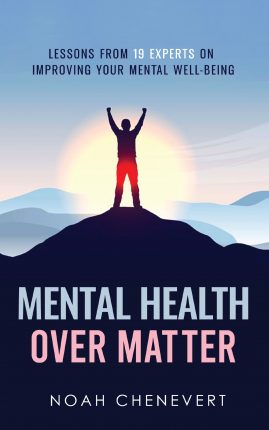
Congratulations on the recent publishing of your new book, Mental Health Over Matter! For those who haven’t read it, how would you describe this book?
Mental Health over Matter is a holistic book about the many areas influencing mental health. Nineteen experts demonstrate how individuals can stimulate their mental health in different areas such as exercise, sleep, and nutrition but also news, psychedelics, and sex.
What inspired you to write a book about mental health, and to have these thought-provoking conversations?
There are three major reasons why I decided to write this book:
- Mental health is an extremely important topic and the number of people with mental health issues continues to increase. Many individuals need help but can’t (immediately) afford mental healthcare due to insufficient supply or budgetary constraints.
- I found that a holistic view of mental health was missing. Good mental health is the sum of adequately incorporating many different practices. You can sleep and eat well, but your mental health will still suffer if you neglect other areas.
- Improving my habits and lifestyle in these 19 areas has helped me/people around me the most. I wanted to share the wisdom, tools, and ideas of experts for everyone to learn from.

Despite a change in attitude toward mental health in recent years, the mental health stigma still exists. Why do you think that is?
Although the overall attitude towards mental health does improve, the mental health stigma is unfortunately quite persistent. I have two explanations. First, many people still associate impaired mental health with ‘weakness,’ as if individuals (especially men) should always be strong. Depression or anxiety is not “sexy.” This often results from traditional beliefs which are fueled by toxic masculinity. Second, people still tend to underestimate the importance of mental health. If I break my arm, people can see that I’m injured. But when I would have severe anxiety or depression, it is more difficult for others to understand what I’m going through.
What is your approach to your own mental health?
At the end of my book, I identify nine overarching lessons that offer rules, attitudes, and guidelines you can adopt in your life to improve your mental health. Perhaps you will realize that you have already incorporated some of these lessons while others are new to you. (See attachment for the nine lessons)
What are the most important things that contribute to good mental health in your life?
I take a layered approach to mental health. The first layer consists of a good diet, sleep, and exercise. My mental health tends to suffer if I don’t pay enough attention to these three aspects.
The second layer is relationships/connections. A meta-analysis concluded that ‘the influence of social relationships on the risk of death are comparable with well-established risk factors for mortality such as smoking and alcohol consumption and exceed the influence of other risk factors such as physical inactivity and obesity’ and that ‘physicians, health professionals, educators, and the media should […] take social relationships as seriously as other risk factors that affect mortality. The third layer consists of other practices, such as going out in nature, mindfulness, and many other activities that have a good effect on your mental health.
If you could give one message about mental health and wellness, what would it be?
Focus on what works for you. Many people out there try to convince you that their way is “the magic solution.” But there is no uniform fix. What works for me might not work for you. And what works for me now might not work for me in a few years. We each must find our own way.
You can received more information about Noah’s book, “Mental Health Over Matter,” on his website.
 My Brain's Not Broken