Five Ways I Build Mental Wellness

As it is Mental Health Awareness Month, it’s a good time to share resources, tips and techniques about mental health and wellness. After a decade-plus of living with depression and anxiety, I am proud of how I’ve learned to manage my mental health challenges. However, chronic mental health issues can mean I sometimes go through my day on auto-pilot, which isn’t great for my mental health. That’s why I want to re-share a few things I turn to when I want to work on my health and build mental wellness. While there are a lot more tips and techniques in this area, these are five things that work well for me. Hope you find this information helpful!

Meditation

My journey with meditation has been lengthy, but I’m finally at a place where I can confidently say it’s part of my mental health toolkit. Meditation has grown in its importance and value in my day-to-day life, and I’d say there are more days than not that I get in a meditation session or two. What I enjoy most about meditation is that I’ve stopped seeing it as a solution to my problems, and more as a practice and way of being. While I wouldn’t go so far as to say meditation is the perfect solution for everyone (I’ve tried it more than a few times), it doesn’t hurt to try!

Exercise

You might already be aware, but physical exercise can play a big role in improving one’s mental health. While it’s important to make sure people have a healthy relationship with exercise and working out, I know that it can also be damaging to only do things when I have the proper motivation (thank you, depression!). Exercising, in any capacity, has the opportunity to give someone a brief confidence boost, raise the heart rate more than it might previously, and make us feel like we have accomplished something. There are many other benefits to physical exercise, but I’ve come to appreciate the benefits to my mental health and wellness more than anything else.

Therapy (There’s More Than One Type!)

Shocker, I know – a mental health blogger suggesting therapy. But I want to go beyond the generic “therapy is good for you” advice and take things a step further. Instead of suggesting that people look into therapy more, I want you challenge what your idea of therapy is. Yes, there is sitting in a room with a therapist, or on a Zoom call with a mental health professional; but therapy is so much more than that. There are several types of talk therapy, including Cognitive Behavioral Therapy (CBT), Dialectal Behavior Therapy (DBT), Mentalization-based therapy (MBT) and so many more. And even beyond that, there are types of therapy that involve activities and movement, going beyond talking and trying to meet the needs of other parts of who we are. I’m not here to say that therapy will solve all your problems, but it is often a safe place to figure out where you can start.

Getting to Know Myself

One important part of building my mental wellness is improving my relationship with someone very important — myself. We spend our entire lives getting to know ourselves, understanding who we are and how we see the world. But there are some things about ourselves that are hard to come to terms with. Maybe it’s part of our personality, or an experience we went through, but all of these things encompass who we are and why we act the way we do. When I think about my mental health challenges, I know that there are aspects of my personality don’t play a significant role in why I deal with anxiety and depression. But those aspects do make up the person I am, and understanding how I see the world helps me understand how it impacts me. I know this might sound a little off-the-wall but the more I’ve focused on understanding why I do things, the more I’ve understood my mental health challenges.

Reflection

Whether it’s through journaling, talking with people or simply sitting and doing some thinking, reflecting on my mental health journey has done some amazing things for my mental wellness. When I reflect on the journey I’ve had, I can see my growth. I can see the improvements I’ve made, and the ways I’ve gotten better at managing anxiety and depression. Upon reflection, I can also look at the ups and downs with a gentler lens that I’d been able to before. I’m not perfect, and I’m never going to be. But rather than chase perfectionism and “getting rid of” my mental health challenges, my reflection leads to gratitude. To being proud of who I am and what I’ve experienced. And it’s that attitude that has made me stronger, braver, and better equipped to face the challenges that I know lie ahead of me. And I know that upon reflection of what we’ve been through, many people reading this might feel the same way.

While these are important ways to build mental health and wellness, they’re far from the only ones! What do you do to build mental wellness in your day-to-day life, and what helps you work on your mental health? Let me know in the comments below!

Mental Health Awareness Month 2024

One of my favorite months of the year is upon us – it’s Mental Health Awareness Month! Held every May in the United States, Mental Health Awareness Month is a month of raising awareness and sharing resources about mental health. It’s a time to educate the public and shed a light on the mental health challenges people face every single day. Together, we are shrinking the stigma surrounding mental illness, suicide and mental health challenges. To start this month off, I wanted to highlight a few campaigns to follow. Regardless of how you get involved, I hope each one of us can raise awareness and hope when it comes to mental health!

Mental Health America – “Where to Start”

Mental Health America, the organization that started Mental Health Awareness Month in 1949, is using the theme of “Where to Start” this year. Per Wikipedia:

“The Where to Start theme was chosen for 2024, with the goal “For anyone struggling with the pressure of today’s world, feeling alone, or wondering if they can feel better, this is Where to Start.”

MHA is also offering a mental health toolkit for people who would like to get more involved in the conversation, but don’t quite know how to start (there is also a Spanish version on their website).

One of the most overwhelming aspects of mental health challenges is getting help. Mental health is a wide-ranging and varied topic, interconnected to many other areas of our lives. A lot of people don’t know where to even begin to get help and because of that, they never do. This campaign serves as a reminder that there are places to go when you don’t know where to go. There’s always a place to start, and this is a good way of doing so.

National Alliance on Mental Illness – Take the Moment”

The National Alliance on Mental Illness has titled their Mental Health Awareness Month campaign “Take The Moment.” This campaign encourages people to start conversations and have open dialogues. By sharing the vast amount of resources offered, people can find what works for them when it comes to mental wellness.

We are each on our own journey, and finding what works for each individual drives this point home. When our dialogue about mental health is rooted in empathy and understanding, it’s easier to see a path forward.

SAMHSA – Mental Health Awareness Month Toolkit

SAMHSA, or the Substance Abuse and Mental Health Services Administration, is an organization that works to highlight the connections between substance abuse and mental health. This month, they have prepared a mental health toolkit as a sort of “one-stop shop” to share information and resources about mental health. This includes social media messages, graphics, and best practices for having healthy discussions about mental health. You can find the toolkit on SAMHSA’s website, which actions and suggestions for posts throughout the entire month.

This month on My Brain’s Not Broken

As I like to do every May, this blog will be a place for sharing resources and information about mental health. In the 7+ years of writing this blog, I’ve seen a lot of growth and improvement in how we talk about mental health. But with everything going on in the world today, it’s more important than ever to check in. Check in with ourselves and our loved ones. Check in with our communities and our local leaders. See who is making mental health a priority, and who might need a gentle push in that direction.

Whether we acknowledge it or not, mental health impacts us all. Mental Health Awareness Month is a time to shine a spotlight on this fact, to learn to live in a happy and healthy way. Sending positive thoughts and vibes to everyone as we continue to shrink the stigma!

How My Depression Changed Over Time

You know, it’s funny. You would think, after ten years of living with depression, of experiencing it on and off, I’d have a better understanding of it by now. Some days I feel like I do. I feel like I understand why I’m experiencing symptoms, or I know exactly what I can do to alleviate these symptoms and feel better. But other days, it’s like I’m dealing with depression for the first time. Maybe that sounds like I haven’t learned much about depression, but I’d disagree. For me, there’s a difference between learning about depression and learning about how to deal with my own depression — and that’s what I’d like to talk about today.

When I first learn about a new idea or concept, I love to take in as much information as I can. I don’t know if this is the most helpful way to learn, but it’s my instinct to cast a wide net. Early on in my journey with depression, I cast as wide of a net as I could. I read books, listened to podcasts, watched videos, and tried to glean as much as I possibly could about what it’s like to live with depression. And even though I learned a lot that was helpful, I was also overwhelmed with the amount of information and experiences that exists. Not all the information I learned worked for me, and I got frustrated quickly.

I’ve written about this on the blog before – when it comes to dealing with depression, what might work for me might not work for you, and so on and so forth. But this isn’t simply a message of finding what works for you. What’s gotten me frustrated lately is to see how my depression has changed and adapted to the changes in my life as I continue to move through it. The intrusive thoughts have changed course, attacking different areas of my mental health. The things I was insecure or anxious about at 20 years old aren’t the same things that exist today, and my brain knows that. The symptoms of depression may not change for people over the years but sometimes, it feels like they come from everchanging sources.

At some point in talking about depression, I realized I had to change my focus. Instead of learning as much about the topic as I could, I needed to learn more about myself. I needed to learn about my instincts, my habits, how I dealt with success and failure. I didn’t really know myself, and that lack of self-knowledge was a barrier to mental wellness.

That’s not to say any of this is easy; getting to know ourselves is a life-long journey. We’re constantly growing and changing, and so is the world around us. This is all to say that what’s true for us one day might not be true a few years down the road, and that’s okay. The better we come to know and understand ourselves, the better equipped we are to deal with the mental health challenges in our lives. I know that despite everything, I am better equipped to handle my depression than I did ten years ago, and that fact gives me strength for the present and hope for the future.

I’d love to hear from you on this topic! Do you think the way you experience mental health challenges changes over time? What tips or techniques have you done to help improve your own mental health? Let me know in the comments!

The Surprising Impact of Depression

There are several symptoms of depression that can make life challenging. Whether these impacts are on our physical health, our mental health or something else, you don’t always know how these symptoms will impact you in your day-to-day life. After years of living with depression, one thing I’ve come to realize is that my experience with depression has a massive impact on the way I see the world. And even though this impact has done a world of good in some areas, it has a negative impact in others. Today, I’d like to reflect on an unintended impact of my depression that I’m hoping to shift my thinking about.

Continue reading →

A Busy, Busy, Busy Mind

As someone who lives with anxiety, my brain often feels like it’s moving a million miles per hour. I think we all feel this way at one time or another; we have so many things to do, and it doesn’t seem like there’s enough time to do it all. I’ve noticed the themes of relaxing and slowing down on my posts in recent months, and I think that’s a response to my current state of being. I always deal with the challenge of a busy mind from time to time but lately, I feel like it’s a daily struggle. Why is my brain trying to do everything, everywhere, all at once? And what can I do about it?

Continue reading →

Summertime and the Living is…Busy

It feels like I write a version of the same post every year. I don’t intend to write this post, and I don’t even know how I get to the point I do. But at some point during the summer, I take a moment, I look around, and I take in just how busy I am.

Oh, you thought I’d say how calm everything was at the moment? That after writing about the importance of slowing down, I’d be able to have create more time for myself? Though I have been able to create some time for myself and been able to spend time with people I love, my life feels anything but calm.

Continue reading →

What Does It Mean to Shrink the Stigma?

During Mental Health Awareness Month, there’s a lot of talk about shrinking the stigma. While it might look different than it used to, the stigma surrounding mental health is alive and well. While many would agree on how important it is to shrink the stigma, it’s easier said than done. Shrinking the stigma isn’t only in our words; it’s in our actions. So, what does it actually look like to shrink the stigma, and how can we contribute?

Continue reading →

Five Ways We Can Better Understand Our Mental Health Symptoms

Earlier this week on the blog, I wrote about understanding symptoms. When it comes to mental illness, many symptoms are easy to see or understand. However, many symptoms also feel impossible to see in ourselves or others. A symptom of depression for one person might not exist for someone else, but both of these people could experience depression. Mental health is complex, and understanding our symptoms (however they look) is a big step on the path toward mental wellness. Today, I want to look at five ways we can work toward better understanding our symptoms.

Do your research – but take it with a grain of salt

Before we get ahead of ourselves, let’s be honest. The Internet is a big place, and not everything you find here is going to be helpful. The more that mental health has worked its way into mainstream conversation, the more likely there will be disinformation or misinformation about it. On the flip side, researching depression and anxiety on my own terms has been one of the most helpful ways of understanding my diagnoses. Researching symptoms is a good way to understand things more, but it’s important to take everything you read with a grain of salt until you talk with a professional. Which leads me to the second point…

Talk with a mental health professional

If you’re experiencing symptoms where your physical health is impacted, you see a doctor. Why would it be any different for mental health? Talking to a mental health professional is a good first step to get the help you need. And if you think that means immediately seeing a therapist or psychiatrist, that’s not always the case. There are many types of mental health professionals who can provide valuable insight, and reaching out to someone you feel comfortable talking with is the most important criteria.

Understand mental symptoms and physical symptoms

As I mentioned in my post earlier this week, symptoms of mental illness can manifest themselves mentally and physically. It took time, but I’ve learned the difference between mental and physical symptoms. I’ve learned to recognize symptoms within myself, and figure out if my symptoms are recurring. It’s important to understand what these symptoms are, but it’s more important to know what they are for you. Understanding how my symptoms impact me is one of the most valuable things I’ve learned when it comes to mental health.

Know the difference between acute and chronic illness

For a long time, my symptoms came and went without any further understanding and introspection about them. Learning the difference between acute symptoms and chronic conditions has been very helpful for my long-term mental health. According to the National Council on Aging, acute illnesses “generally develop suddenly and last a short time, often only a few days or weeks,” while chronic conditions “develop slowly and may worse over an extended period of time – months to years.” Once I could start defining my symptoms as acute or chronic, I could better learn how to deal with them.

Take things day by day

This last bit of advice sounds a little cliche but it’s something I come back to time and again. For a long time, my only reaction to a new aspect of my depression and anxiety was fear. I was afraid of learning about new symptoms because I assumed I’d have to deal with them every single day. I’ve since learned that this isn’t the case; a symptom that might be challenging one day might not show up the next. Learning to take things as they come has taught me a lot not only about my mental illnesses, but also about myself. Every day brings new lessons on dealing with depression and anxiety. In my experience, the best way this happens is when you slow down and take things day by day.

Now I want to hear from you! What is a bit of advice you have for someone who is learning about symptoms of mental illness? Let me know in the comments!

"There is only one corner of the universe you can be certain of improving, and that's your own self." - Aldous Huxley

Another Chance to Start Fresh

After my (in my opinion) grumpy post about how challenging the month of February is, I’d like to try a different approach today. I’m glad I’ve admitted that the winter is a difficult season for me; doing so has helped shift the way I manage my mental health this time of year. While it hasn’t solved my problems, I’m glad that I’m more aware of what I’m up against.

Make no mistake, I still have my bad days – and during the winter, it feels like they happen constantly. But this awareness helps me appreciate the good days, the good moments where I don’t feel anxious or depressed. Moments where I feel like myself. And it’s those moments I want to build on, ones I want to experience more and have around more often.

At the start of a new month, I often think about my goals and things I want to do. Sometimes, these goals feel like the same old, same old: I want to read more, write more, meditate more, journal more. I want to have fun experiences and do interesting things. I constantly think about what I want to do but it wasn’t until thinking about this post that I realized something. I think often about what I want to do but in this context, I rarely think about who I want to be.

I’ll admit, this type of thinking is challenging for me. My instincts are often to act; when I see a problem I want to find a solution and do it as quickly as possible. It’s not the worst trait in the world, but it can often put me in situations that are more complicated than they need to be. If I don’t actively work to slow myself down, I’ll rush into something. These things usually aren’t the end of the world (my anxiety would disagree), but it happens enough that once I recognized it, it wasn’t something I could ignore.

I want to reflect on who I want to be, how I want to be, this month. I want to think about who I am in this time of my life, and how I want to move through this specific time. That doesn’t have to mean anything has to change from what I’d normally do – in fact, it’s possible nothing will change. But I’m not looking to change my actions; I’m looking to change my attitude surrounding those actions. I want to get a better sense of who I am and why I do what I do, and it starts with reflection.

I’m trying to build on my mental health on a month-to-month basis. Every month brings new challenges, new highs and new lows. But it’s also a chance. A chance to get to know myself better. A chance to learn from myself, and those around me. And regardless of how it turns out, I’m going to be grateful. Because when next month rolls around, I’ll be able to start fresh and try again.

Building on momentum isn’t as easy as it sounds, believe me! How do you get yourself motivated for the month ahead? Let me know in the comments!

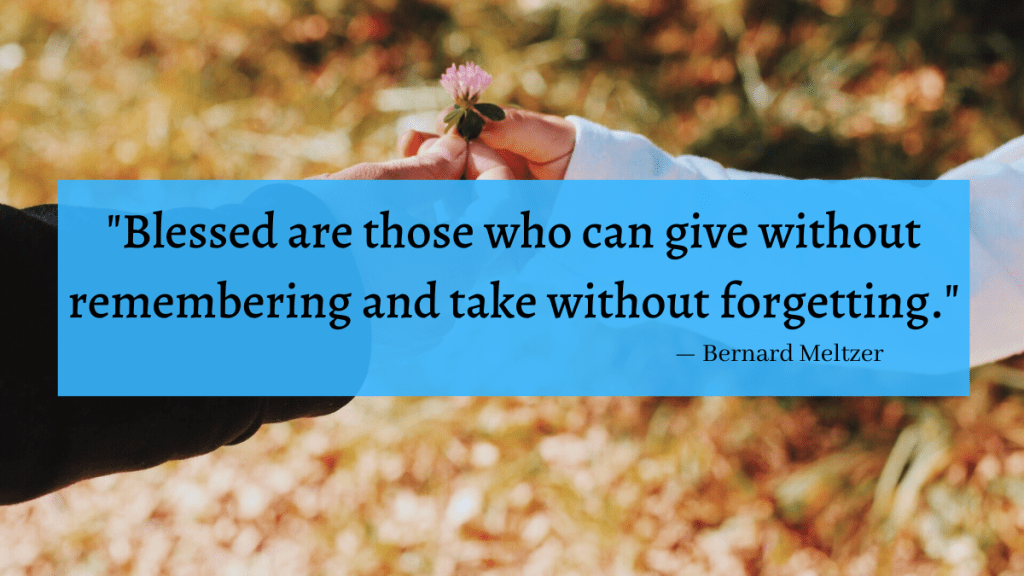
"Blessed are those who can give without remembering and take without forgetting." - Bernard Meltzer

Breaking Down Mental Health Terms: What Are Intrusive Thoughts?

Over the years, I’ve learned a number of words, phrases and definitions that have helped me understand my own mental health. Some of these are connected to mental illness or medicine, while others are connected to mental wellness. In this recurring series, I break down some of the mental health terms I’ve learned over the years. Today, I’ll be breaking down intrusive thoughts: what they are, what they look like and what we can do about them.

What are Intrusive Thoughts?

I spent many years experiencing intrusive thoughts without knowing what they were. Even once I learned about them, I still had trouble understanding them. The definition of intrusive thoughts is quite simple, but dealing with them can feel far more complicated. According to Healthline, intrusive thoughts “are unexpected images or thoughts that seem to pop into your head. They’re often strange or distressing. But these thoughts happen to almost everyone from time to time.”

It’s not always easy to spot intrusive thoughts, or to name them when they happen. In fact, not knowing how to name these sort of thoughts can lead someone to assuming that’s just how their mind works. But intrusive thoughts are often unpleasant and unwanted, and that lack of desire for a thought you may have is a good sign that you’re experiencing an intrusive thought. This can also lead people to feeling ashamed or wanting to control/stop these thoughts, which can lead to spirals and other mental health issues.

What Do Intrusive Thoughts Look Like?

Intrusive thoughts are just that – thoughts. There’s an instinct to believe that every thought we have matters or to worry about what they mean, but they’re just thoughts. Our brains have (on average) around 6,000 thoughts per day and for a lot of people, most of those thoughts are pleasant or just nondescript. But it’s these intrusive thoughts – which can often feel scary because they are dark or violent, or full of worry or doubt – that have a habit of sticking with us. These are the thoughts we can’t let go of if we’re not careful.

When I think about identifying intrusive thoughts, there are two criteria I look out for:

  • Did this thought feel unwelcome/unwanted? Was I thinking about something else, or anything at all, when this thought popped into my head?
  • Is the content unpleasant, or something that feels vastly different from what we usually think about?

When I can identify these sort of patterns when it comes to a thought (or a set of thoughts), I can recognize them as intrusive and begin to deal with them.

What Can We Do About It?

The more I write these blog posts, the more I end up stressing that the most important part of understanding any of these terms is awareness. This is especially true with intrusive thoughts. Without knowing what to call these thoughts or recognize when they happen, things can feel scary. We can begin to think that those thoughts are who we are, or that they aren’t intrusive and they just are part of us. But we need to push back against this narrative and build a new one.

Thoughts are just thoughts, and if they aren’t interfering with your daily life or make a person feel like they need to take action, they can be harmless. But it’s important to name and define the various aspects of our mental health, even if we don’t deal with all of them. The mental health stigma grows when we’re afraid or unable to talk about our problems. We still might be afraid of these problems when we name them, but at least we know what we’re up against.