Getting Through the Process

I’m a little nervous this week. As I shared a month ago, I’m currently in the process of weaning myself off the medication I take for my anxiety and depression. Since I am at the lowest level of one of the medications, I have been slowly lowering the dosage on the other medication until I am off it entirely, and I have finally reached the time where I go off that medication entirely – a very big step to take.

In our various appointments, my psychiatrist has shared with me that this will likely be the most difficult part of the process. There’s a good chance that while my body goes through withdrawal and gets the medicine out of my system, symptoms of my depression and anxiety could return. While he wasn’t guaranteeing anything (and did mention that all people are different), it’s a very real possibility that he wanted me to be aware of. I would be silly not to be a little scared, right?

That being said, don’t be afraid if you don’t see a post from me at the times I usually post. I will do my best to keep the blog going and keep posting, but I’ll admit that it won’t be easy. One encouraging thing is that I am in a good place to try and do this – the decision was not made on a whim. I have been on my current meds for the past two and a half years, and by taking all the proper precautions I’m ensuring that I am doing this in the safest way possible. Wish me luck this week – I’ll need all the good vibes sent my way!

Have you ever weaned off a medication (any medication) you’ve taken for a long time? Was it weird? I want to hear about it!

Staying in Bed Isn’t Good for My Mental Health

I am not very good at waking up in the morning. I’ve written about this in the past, but it hasn’t made things any easier. When the alarm goes off, I hit snooze. I’ve calculated how long it takes me to get ready in the morning, and I am prepared to use the minimum amount of time to get dressed and head off to work. I’m not proud of it, but that’s my reality.

I’m also not very good at going to sleep at night. This often happens because it’s hard to turn off an anxious brain, but other factors play into it as well. There are plenty of tips out there about falling asleep in an efficient manner, and I’m pretty sure I’ve tried almost every single one. Some have worked better than others, but I haven’t found that secret formula that gets me to fall asleep in a timely manner; I usually sit in bed for a half-hour or more before drifting off to sleep.

But one thing I am getting much better at is not staying in bed. If I’m not sleeping, I’m not in my bed. It’s an important distinction and one that has improved my mental health.

The connection between sleep and mental health is deeper than you realize. Getting the most out of your time in bed could be a key factor in improving your mental health and even though it’s hard for me, I understand those benefits. Though sleep is essential to your health, staying in bed for too long or being in bed too often makes it harder to cope with your mental illnesses. When my depression is the worst, all I want to do is stay in bed and sleep. It’s my refuge, my place of safety from the world. And though it makes me feel better in the moment, I always regret staying in bed for too long and hate myself for it. It’s not a great long-term solution, and it does not improve my mental health.

I remember in college, I could stay in my bed for hours at a time – watching television, doing schoolwork, even eating meals. I developed a dependency on my bed that was not only unhealthy but extremely unhelpful. I don’t have that relationship anymore, and I think that’s because I realized how much of a hindrance this behavior was in my daily life.

I’m not asking much of you this week, but I’d encourage you to be aware of how much time you spend in bed. Is it a place for sleeping, or do you spend more time there than you realize? I’m not asking you to change how you deal with your mental health or mental illness, but becoming aware of your habits – good and bad – is a good thing to do.


Celebrate the Little Victories

Yesterday I went for a run. I hadn’t gone on a run in more than a year, and I was nervous as to how I’d feel after, physically and mentally. Since I have a bad back, my preparation for physical activity is more involved than most, and I don’t always know how my body will react to certain workouts. But I also know the benefits of exercise go beyond the physical, so I wanted to see if this was something I could get back into. And it was...incredible. I didn’t break any records or move at the speed of light, but I was proud of my effort. But then came the hard part – the recovery.

The recovery is where workouts have a tendency to affect my mental health. When my back hurts after a long workout, I immediately tense up and think that it’s the end of exercising. I lose all the confidence I gained during my workout, and feel worse about myself than I did before I started. Then comes the negative self-talk about how I’m a lesser person than I used to be. It doesn’t take much to spiral from there, and all of the benefits of exercise get washed away in a cloud of depression.

As the adrenaline continued to flow after my run, I knew a crash was coming. And sure enough, when I woke up this morning I could feel it. I was sore all over, and my back was incredibly stiff. The negative thoughts began to pop into my head, one after another. Thoughts that I could never run again, that it was a stupid idea to start with. I was crushing myself hours after feeling better than I have in a long time.

How did I get out of this mindset? Well, to be honest, I didn’t. This post doesn’t have all the tips to stop negative thoughts – you might have to read another post for that. But I wanted to share that in spite of the negative thoughts, I was able to do something that I’d long considered impossible for me to do. I’d like to start running on a more regular basis – twice a week is my goal – but for now, I’d like to revel in the fact that I was able to go for a run at all. That despite what I tell myself, I’m still able to accomplish a great deal.

You’ve probably heard the phrase ‘actions speak louder than words,’ right? But have you ever used that phrase in regards to the words you tell yourself? In this case, my actions (running) spoke louder than my negative words. I just went out and did the thing.

Sometimes it’s more complicated than that, but sometimes it’s not. I had a goal and, rather than think about it, I went ahead and did it. The success was not in how well I ran, but that I ran at all. Don’t ignore the little victories in life; they add up. Whether I start running as much as I want or never run again, I will always be able to look back on this little victory as a time where I did something. That might not sound like much, but it’s enough for me.

What are some of your favorite little victories? I want to know!

Paulo Coelho.png


Don’t Let Anxiety Destroy Progress

For the past week, my anxiety has been something terrible. While it was triggered by something specific, it’s wedged its way into every facet of my life and crushed my thought process. Every day, I feel like I can’t help going into a downward spiral every second my mind isn’t concentrated on a specific task. And it sucks – to put it lightly.

I was going to write a post about how much this anxiety sucked, but something popped into my head as I started writing. I thought about how this recent bout of anxiety has diminished the progress I’ve made in recent months. It made me feel like all the progress I made recently was wasted. That it was pointless. That I would have to go back to square one when it came to my mental health.

This always makes me think of the term ‘relapse.’ While it’s more commonly associated with drugs and alcohol, I’ve also seen it used in regards to mental health disorders. And while I don’t like to use that term when it comes to my mental health, I couldn’t help but thinking that I was going through a relapse. I was afraid I was reverting to the old me – the one that got sent to the psych unit after a panic attack and suicidal ideation.

What stopped me from going down the rabbit hole of a relapse was reminding myself that my battle with mental health is not linear. I won’t just slowly improve until one day I’m rid of my demons. There are peaks and valleys to my mental health, just like anything else in life. Some days will be good and others will…not. I put so much pressure on having good days because I’m afraid that a bad day will negate all my progress. But is that true? No.

A bad day will get in the way of improvement. It might get in the way of doing some things that I would usually do. But it does not cancel out the months, the years of hard work that I have put in to get to this point. And the same goes for you.

If you work on something – your mental health, a special project, anything – for a long time and then have one bad day, do not discount all the progress you’ve made. You’re not perfect. You’re human. You are allowed to make mistakes. In fact, they are inevitable. So you can either let them get in the way, or you can grow from them.

But while this can apply to all walks of life, I tailor this mindset to mental health specifically because I know what negative thoughts can do to a person. My anxiety works me up into such a frenzy that I don’t think anything else matters besides the anxious thoughts in my head. But that’s not true. I have made progress recently – progress I am damn proud of. And I have grown strong enough to know that one day might set me back, but it won’t take me out of the game. That might not seem like much, but it makes a world of a difference when I try to get out of bed in the morning.

I know it’s easy to say, “don’t let your mental illness negate your progress.” It’s much easier said than done. I can’t even promise that I’ll always take my own advice. But I believe there is bravery in the attempt, and there is power to even have these thoughts in your head. So maybe all this post does is put the idea in your head. Maybe that’s all you need today. That’s okay. Because every day is a new battle, and we should use all the weapons we can get.

Frederick Douglass.png

What is My Mental Health Goal?

In the year and a half since I started this blog, I have undergone a positive transformation in regards to my mental health. I have started to prioritize healthiness over happiness, and that decision has paid dividends. But what are the long-term goals for my mental health? The reason I’m asking this question is because I don’t have an answer.

One of my most reliable coping strategies is living present and taking each moment as it comes. A speaker at a work event said something last week that stuck with me, and it’s an approach I realized I’d been taking with my mental health.

“Just make it through the next meal. If you can’t make it through the next meal, make it through the next hour. If you can’t make it through the next hour, make it through the next minute. And if you can’t make it through the next minute, make it through the next moment.” – Jon Sanchez

I’ve focused so much on getting through every hour, every minute, every moment, that I haven’t thought much about what I’m trying to accomplish. Not that there’s anything wrong with that; sometimes you have to use whatever you can to get through the day. But those days can add up, and sometimes knowing that you have a long-term goal to work toward is a source of inspiration and strength on the days when things aren’t so great. It’s been that way with other aspects of my life, and now I want it to happen with my mental health as well.

There is no shortage of information on setting and achieving goals (if you don’t believe me, just Google it), and while it’s a good place to start, you need to make sure that your goals are unique to you and your lifestyle. This is where I struggle! I don’t know how to cater goals to suit my needs, and the result is that no goals are made at all.

I could also chalk this up to not really feeling secure in what my purpose is at the moment. While I’m extremely excited about my impending move, I realize this decision will not provide more security, which makes having long-term goals all the more important. I guess it’s a step in the right direction that I’m even thinking about this; a year ago, having a long-term mental health goal was a pipe dream. I was just worried about making it to the next day. But now that I’m able, I’d like to figure out what it is I’m working toward. And when I have, I’ll be sure to let you know.

What are some of your long-term goals? Whether they’re mental-health related or not, I could certainly use some ideas!

Andrew Carengie

Three Things to Remember When You Feel Guilty

Guilt almost ate me alive last week – I’ll explain. I didn’t wake up on time for work and was about an hour and a half late.

That’s it! That’s all that happened. It wasn’t fatal to my job, and I got all my work done that day. But I felt very guilty about it. And it took much longer than it should have to make that guilt go away.

Why did I feel guilty? A more accurate question would be why did I not feel guilty? I felt like a bad employee and that I let my team down, which consequently led me to think about the worst-case scenario of the ramifications of my actions. I felt lazy and unreliable and perceived my lateness as a character flaw. I didn’t look at being late as a rare occurrence but as an indicator of who I am as a person. Is that true? As I came to realize, it is not, and that is not who I am.

I’m sharing this because I know I’m not alone in this experience. Guilt plays a much bigger role in our lives than I’m sure we want – at least, it does it mine. If guilt doesn’t affect you, please let me know how you’re able to exist in this way because I am all ears on that topic.

But let’s say you’re like me, and feelings of guilt are hard to get rid of. How do you get rid of them? I came up with three things I continued to repeat to myself until my guilt subsides.

This is not who you are – you are more than this

This is my favorite of the three things because, as I wrote earlier, my guilt comes from the fact that I believe my mistakes – even if I only make them once – are all character flaws. Reminding myself that there’s so much more to me than what I feel guilty about is a reminder that I am a complex person who is not defined by any one thing – good or bad.

Is it really that bad?

I’ll be honest; sometimes the answer to this question is ‘yes.’ Sometimes we do things that are just as bad as we make them out to be. But the reality is that our guilt permits us to make things out to be much worse than they are. Was being late to work one time, after not being that late all year, really all that bad? In the grand scheme of things, maybe not.

Who does this effect?

Another way my guilt becomes exacerbated is that I think that so many people will suffer from my mistakes. Did I miss a meeting when I was late? No. Did someone need me during the time I was missing? They did not. In reality, this situation affected me and my boss, who was wondering where I was, and no one else. The office didn’t come to a halt; people moved on with their day. Sometimes our guilt can make us think that our mistakes are the end of the world – oftentimes, the opposite is true. Most of my mistakes only affect me, if I’m being honest. That minimizes the impact of my mistake and gives me a good perspective to look from.

I don’t have all the answers. I continue to feel guilty about plenty of things – mistakes or not. But taking steps to assuage your guilt and remind yourself of who you really are, and that you’re more than one or two bad choices, is key to overcoming the debilitation that guilt can produce.

What’s something silly that you’ve felt guilty about? I want to know!

(Slowly) Going Off My Medication

About a month ago, I decided that I would try to get off the medication I’ve been taking for the past two and a half years. I’m not going to get into what I currently take (I hope I can explore that in future posts), but instead, I want to talk about the process of getting off the medication. My psychiatrist suggested reducing my meds every month until I was completely off them, a process that will last into the summer. I am currently on my second reduction and will go back in a few weeks to reduce my meds a third time.

So far, a month and a half into the process, I don’t feel any different physically. I have been taking two medications for the past two and a half years; one in the morning and one at night. My dosage of the AM pill is half of what it used to be, and my PM pill has been unchanged since it’s at the lowest possible dosage. My schedule has not been any different in recent weeks which is helpful, but I think that I’ve also been taking the proper steps to take care of myself physically.

There are a few reasons I’m trying this now. One of the big reasons is that I don’t want to have to jump through hoops while I’m abroad about how to get my medication. It’s been enough of a hassle trying to get it here with good insurance – I can’t imagine what I’d have to do when I’m in Europe.

While that’s a logistical thing the other important reason is that I am in a good mental state and have the time and resources to give this a shot. I really want to know if I will need these meds going forward.

Why I am I sharing this? Because I want to communicate a few things with you guys. One is that I want to be transparent about what I am doing and why. I would not be as mentally healthy as I am today without the meds I have been taking, and I can admit that without guilt or shame. But now that I am in a good place, I want to know how much of my depression and anxiety was brought on my external/triggering factors and what was beyond my control.

But I also know that stopping a medication, any medication, should be approached with caution. I did not decide one day to just stop taking my meds. Instead, I took a calculated approach toward reducing my medication to see how it will affect me.

If all goes well, maybe I don’t need medication for the time being. I’m aware that it might not go well and I’ll have to get back on it, but I feel like I owe it to myself to give it a try. Send any prayers, thoughts or good vibes my way – I’ll need it!

Have you ever tried getting off a medication? What was it like for you? Let me know in the comments or drop me a line at mybrainsnotbroken@gmail.com!


Reading and Mental Health

As a kid, I loved to read. While I had favorite authors and genres, it came to a point where it almost didn’t matter what kind of book it was – if I hadn’t read it before, odds were that I’d give it a shot. I’d guess that I’ve read hundreds of books in my lifetime, but the vast majority of them happened before I went to college – and I had to deal with my mental health.

When my mental health worsened, it became hard to read. I had difficulty concentrating on one task at a time, and the result was many years of multitasking. I would have music on while studying, or stream a show on Netflix while doing some writing. I could not focus on a sole subject or interest because I could not develop a one-track mind. Instead, I would have two thought processes running in my head: 1) the normal thoughts and feelings about what it is I was doing at the time, and 2) the negative thoughts and self-talk that seemed to be popping up more and more every day.

By multitasking, I was occupying both thought processes and keeping my mind fully occupied and away from the negative thoughts. But reading a book meant that I would have to develop a one-track mind that concentrated on the words on the page – a near-impossible ask for my anxious self.

This meant that over the course of my college career, I read very little outside of what was required for school. After college, I tried to get into reading a little more, but it proved to be too difficult. I thought that I had to be busy all the time in order to combat the negative thoughts, and the result was an unhealthy lifestyle that definitely didn’t make me feel better about myself. So, like in many other aspects of my mental health and my life, I took a new approach.

First I started rereading books that I’d enjoyed in the past. Some were easier to read than others, but it helped me get on a good schedule of reading consistently because even if I didn’t enjoy it, I’d already read the book before so it wasn’t a total waste.

When 2019 started, I decided to take a chance and really get into reading again. I started by making it a goal to read only 10 pages a day. It was a small chunk, but it was manageable and made me feel like I’d accomplished something. Soon, I started reading during my lunch break at work, which satiated my need for multitasking while helping me learn how to focus on reading.

It’s taken a few months, but I’ve finally hit my groove. I’ve read four books so far in 2019 and I just started my fifth, and while I’m not in love with reading like I used to be as a kid, I like it a whole lot more than I have in recent years. I hope that as my mental muscles grow stronger I can read not only as a coping mechanism but because I genuinely enjoy it.

Has your mental health affected a hobby or activity that you love? Let me know in the comments!

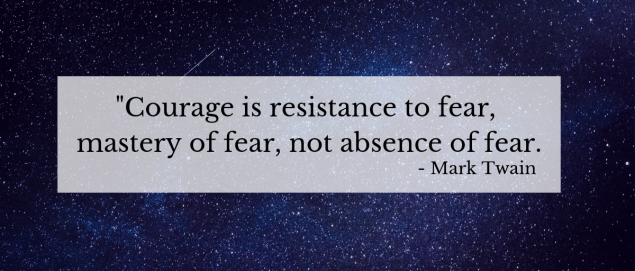
Fear of the Unknown – And the Known

When I was a teenager, I would feel…off. You know how it feels when something is off. It’s like having a pebble stuck in your shoe, or that last bit of corn in your teeth. Of course, those situations have solutions. Take the pebble out of your shoe. Get a toothpick. Now imagine feeling that way but being unable to change it. That was my reality before knowing what was wrong.

Fear of the Unknown

So when I first saw a therapist, when depression and anxiety were first mentioned, I assumed I would be relieved. But I wasn’t. Instead, my anxiety grew, and I was more nervous about my situation than before, when I didn’t know what was wrong.

There’s a lot to be said for fear of the unknown. It makes sense. I’m not saying you should or should not fear the unknown (maybe I’ll tackle that subject another time), but I am saying I had that fear, and I understand why. But what I didn’t understand was the fear that followed. Even though I knew what was wrong, I was still afraid. In many ways, it was worse than not knowing.

Fear of the Known

I was shocked. I was unprepared. I didn’t think I’d be that much more afraid of knowing something than not knowing something, but I was.

I’m not sure why I thought that fear would go away. Maybe I thought I would be a braver person now that I knew what I was dealing with. In many ways, I was. But as those close to me could attest, in many ways I was not. I let fear of my mental illness dictate what I did and did not do. I let fear in, and it won. For a long time, it won.

These days, fear wins less. Every day I get stronger and learn new ways to attack my mental health. But one of the biggest changes was recognizing the role fear played in my life and trying to minimize that as much as possible.

Whether you’re afraid of something you know or something you don’t, fear is fear. When you battle it, you won’t always win. It would be naive of me to tell you that I’m no longer afraid of my mental illness. But for every bit of strength I gain, that fear, every so slightly, shrinks.

Like many things in life, mental health is a marathon, not a sprint. Each day is an opportunity to be better. And since we’re honest here, it’s also a chance to get worse. And sometimes, it will be worse. There’s no way around that. But letting the fear of mental illness dictate what you can and can’t do? You can fight that. You can fight back. And you might not always win, but you will get stronger. And the stronger you get, the better you can fight. And my hope for you is that the fear you have, of the known and the unknown, slowly fades into nothingness.

Mark Twain.png


I Want to Meditate. How Should I Do It?

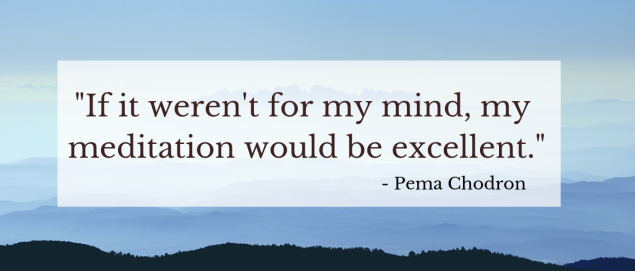
Meditation has never come easy to me. I’ve done it off and on for years, but I have never been able to get into any sort of consistency when it came to meditating on a daily, even regular, basis.

But it’s so simple, you’re probably thinking. And as a concept, you’re totally right. You sit still and let your mind wander. You focus on your breathing and develop heightened awareness. Most people end meditation feeling way more at peace than they did when they started (I’d say all, but you never know!). But not me.

Meditation for an Anxious Mind

Part of my meditation problems are due to my anxiety. GAD means that thoughts are filling your head constantly. They don’t give you time to pause and process – it’s just one thought after another, flooding your brain with both important and unimportant thoughts. Since my best approach to dealing with anxious thoughts is to keep my mind busy with other creative outlets (writing, work, etc.), being in a situation where my mind is free to roam has never really helped. Thinking all through meditation makes that meditation pretty counterintuitive, so it’s hard to gain any momentum from repetitive meditation.

Not Having the Right Goals

Like other tools in my mental health toolkit, I think I’ve been looking at meditation all wrong. I expected every session to end with me feeling refreshed, happy and better about myself. When that didn’t happen, I blamed meditation as being something that ‘didn’t work.’ I was looking for meditation to have some sort of instant impact that made my mental illness go away. As with any habit, my skills would undoubtedly grow stronger with time as I meditated more. But I didn’t have patience, and I didn’t have the right goals. No wonder it didn’t work out.

Like exercising, journaling and everything else I do to be mentally healthy, meditation can be a tool in the chest rather than the be-all and end-all of my mental health. This new outlook might be what I need to make it work this time.

I Need Your Help

I’d like to start meditating on a daily basis. I think that, with the right approach and with the right goals in mind, meditation can be something that I incorporate into my daily routine. But how should I meditate?

In the past I have used several apps, including Headspace, but they didn’t work for me. However, now that I have this new approach I am willing to try things that didn’t work for me before. I’m open to suggestions, so let me know in the comments how you meditate. I need all the help I can get!

Pema Chodron