Oftentimes during Mental Health Awareness Month, people share their stories about mental health. They open up about their struggles, the challenges that mental illness can present. These stories can vary in experience, but there is a common purpose: to raise awareness. By sharing our stories, we are creating spaces that help other people share theirs. But sharing our stories is much easier said than done, and that’s what I want to talk about today.
Continue readinglifestyle
My Brain’s Not Broken Song of the Month – Don’t Matter Now
I love music. I love listening to it, having it on in the background, seeing it live, popping on a record. I love the way music can make me feel any and every emotion there is, sometimes without even trying. Most importantly, I love music because of the way it impacts my mental health.
That’s why, each month on My Brain’s Not Broken, I’m going to share a song with you. It might be a song I can’t stop listening to at the moment, or a song I have a history with. It could be a song I don’t know much about, or I’ve listened to a thousand times. Regardless of the reason, these songs have inspired me and my mental health, and I want to share them with you. Whether you’ve heard of them or not, I hope these songs give you more insight into my world and my approach to mental health.
Continue readingLosing Track of Where I Am
There are many ways my life has changed in the past few years. Many of those things are in my day-to-day life, but I also feel like the world is changing around me. From the way we work to the way we interact with the world, these changes mean that my life looks different. One of these ways is the ever-growing presence of multi-tasking in my day-to-day life. I’m not here to defend or attack multi-tasking (at least not today), but there’s no denying that it’s part of our lives. Not only is it easier than ever to multi-task, but I also tend to notice I can create more issues than I solve by doing so.
Continue readingWhy Do We Downplay Our Accomplishments?
Last year, I wrote a series of posts about challenging my instincts toward minimize the good things I do in life.
Back in 2021, I wrote a few posts about challenging my instincts. I’m interested in instincts because for a long time, I overestimated their power. I thought instincts were something that could never change. I thought they were something we’d have to live with, and I would have to learn how to fight them. The reason I wanted to challenge my instincts then, and I still do now, is because I don’t like all my instincts. One of the most challenging in particular is my ability to downplay accomplishments. And I’m not alone. Why do we downplay our accomplishments, and what is behind that? That’s what I want to investigate today.
Continue readingA Reminder About Timelines
What does it mean to have a timeline? Understanding and working with timelines feels like a key part of being part of today’s world. Whether at work or school, in our professional or personal lives, we have created a world that’s always on a timeline. Some plans might be short-term, while others can stretch on for years. Like many parts of our lives, there are pros and cons to these timelines. They can free us up or make us feel constrained; they can bring stress or relief. But today, I wanted to remind myself (and you, whenever you read this) of one very important thing: you are on your own timeline, and that timeline isn’t permanent.
The inspiration for this post happened around a month ago, when I wrote something about my excitement for the coming of spring, and the start of another month. To me, each month feels like a new opportunity, a chance to start fresh and improve where I can. That’s what made me think of timelines; I was reflecting on what mine are, how I create them and how they’re enforced. There were two key thoughts this reflection led to.
Even though every month is a new chance for me to start fresh, not everyone sees things that way. We all deserve a chance to slow down, take a deep breathe and reset. Some people do that on a daily basis; others on a yearly one. Doing this on a monthly basis works best for me, but I can see why someone else might find that challenging. This is a good reminder that even though we’re all human, we experience the world in different ways.
As I step into April, a few thoughts about timelines crossed my mind. The first key thought was my realization that not all my timelines are up to me. A lot of the timelines (and deadlines) I have are either a) asked of me, or b) created with my input. Either way, there are situations where I don’t have complete control, and that can be frustrating. I’d like to change my attitude on that, and it starts with recognizing what my own expectations are.
The other conclusion I came to – and this was the big thing for me – was the reminder that it’s okay to adjust your timeline. When I was younger, I saw most things in black and white. But with every passing year, I’m learning that most things aren’t that way. There are shades of nuance everywhere and not only is that okay, it makes sense. Human beings are complicated – why wouldn’t our problems be? So I try to adjust my attitude. Changing course doesn’t always signal failure, and making adjustments doesn’t mean you did something wrong. I know I’m way too harsh on myself when I have to adjust something. That’s because for a long time, I thought it was wrong to do so.
I’m not here to hate on deadlines or condemn people who make plans. I like both of these things, and they play an important role in our lives. What I’m also saying, however, is that it’s okay to adjust. It doesn’t mean we always can, but we shouldn’t forget we have that option. As you go into this month, I hope you can remember that – no matter what your timeline is or where you are on it.
More Overwhelmed Than I Used to Be
It feels like it happens more often than it used to these days. I’ll be trying to finish a task or make a decision, and my brain will freeze up. I’ll get panicked, and I won’t be able to complete the task I started (if I can even remember it in the first place). I lose my breath, lose focus, lose my grip on whatever I was doing. This feeling I get, the feeling of becoming overwhelmed, has become more of a problem for me in recent years. In today’s post, I want to try and figure out why.
Continue readingSpringing Into a Brighter Mood
I’m pretty sure I write this sort of post every year, and I love doing it. I write a lot of posts about the way weather impacts my mental health, and today’s post is a similar one. The days are starting to be a little longer, and the weather a little warmer. I feel like I’m shaking myself awake after a long hibernation, and I’m ready go out into the world again. That’s right everyone: winter is almost over and spring is coming fast!
Continue readingMental Health Over Matter: An Interview with Noah Chenevert
I recently got the opportunity to connect with Noah Chenevert, a mental health advocate and author of the recently published book “Mental Health Over Matter.” In this interview, we talked about the book, Noah’s approach to mental health, and his attitudes surrounding mental health in the current day and age. Thanks for taking the time, Noah!
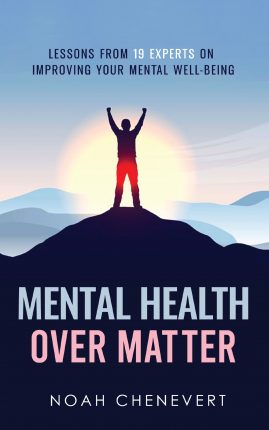
Congratulations on the recent publishing of your new book, Mental Health Over Matter! For those who haven’t read it, how would you describe this book?
Mental Health over Matter is a holistic book about the many areas influencing mental health. Nineteen experts demonstrate how individuals can stimulate their mental health in different areas such as exercise, sleep, and nutrition but also news, psychedelics, and sex.
What inspired you to write a book about mental health, and to have these thought-provoking conversations?
There are three major reasons why I decided to write this book:
- Mental health is an extremely important topic and the number of people with mental health issues continues to increase. Many individuals need help but can’t (immediately) afford mental healthcare due to insufficient supply or budgetary constraints.
- I found that a holistic view of mental health was missing. Good mental health is the sum of adequately incorporating many different practices. You can sleep and eat well, but your mental health will still suffer if you neglect other areas.
- Improving my habits and lifestyle in these 19 areas has helped me/people around me the most. I wanted to share the wisdom, tools, and ideas of experts for everyone to learn from.

Despite a change in attitude toward mental health in recent years, the mental health stigma still exists. Why do you think that is?
Although the overall attitude towards mental health does improve, the mental health stigma is unfortunately quite persistent. I have two explanations. First, many people still associate impaired mental health with ‘weakness,’ as if individuals (especially men) should always be strong. Depression or anxiety is not “sexy.” This often results from traditional beliefs which are fueled by toxic masculinity. Second, people still tend to underestimate the importance of mental health. If I break my arm, people can see that I’m injured. But when I would have severe anxiety or depression, it is more difficult for others to understand what I’m going through.
What is your approach to your own mental health?
At the end of my book, I identify nine overarching lessons that offer rules, attitudes, and guidelines you can adopt in your life to improve your mental health. Perhaps you will realize that you have already incorporated some of these lessons while others are new to you. (See attachment for the nine lessons)
What are the most important things that contribute to good mental health in your life?
I take a layered approach to mental health. The first layer consists of a good diet, sleep, and exercise. My mental health tends to suffer if I don’t pay enough attention to these three aspects.
The second layer is relationships/connections. A meta-analysis concluded that ‘the influence of social relationships on the risk of death are comparable with well-established risk factors for mortality such as smoking and alcohol consumption and exceed the influence of other risk factors such as physical inactivity and obesity’ and that ‘physicians, health professionals, educators, and the media should […] take social relationships as seriously as other risk factors that affect mortality. The third layer consists of other practices, such as going out in nature, mindfulness, and many other activities that have a good effect on your mental health.
If you could give one message about mental health and wellness, what would it be?
Focus on what works for you. Many people out there try to convince you that their way is “the magic solution.” But there is no uniform fix. What works for me might not work for you. And what works for me now might not work for me in a few years. We each must find our own way.
You can received more information about Noah’s book, “Mental Health Over Matter,” on his website.
Music and My Mental Health – Part One
In the five years since I started this blog, there’s something that I haven’t written much about: music. It’s difficult for me to explain — succinctly, at least — but music plays a huge role in my mental wellness. While I dabbled in singing and playing musical instruments as a kid, I never had much talent in that area. But even so, I love listening to music. I’ve grown in my taste and the types of genres I enjoy, but the relationship I’ve developed with music over the years if one I’ve come to cherish.
There are many different genres of music I love, and each of them play a specific role in my life. There are go-to songs I want to play when I’m excited, when I’m anxious, when I’m sad and when I’m depressed. Music has been beneficial for my mental health for a long time and today, I want to share the benefits it can have for everyone’s mental health.
For this post, I decided to do a little research. There’s logic behind the value of music and why/how it can make us feel good, but I wanted to go beyond that. Beyond being a hobby or a profession, music shows up in the mental health space. Music therapy gives people a chance to write, play or listen to music as a way of understanding themselves. There are also psychological benefits, such as reducing stress and improving cognitive performance.
Music can be a therapeutic tool, and that doesn’t have to be in an official capacity. It could be listening to our favorite song after a long day. Putting on soothing music when we’re wound up, or playing pump-up music when we exercise. Many of us use music therapeutically and don’t even know it.
There is also the way people use music as a form of expression. People make music about every single emotion under the sun. They write music, lyrics, they sing and dance. Writing is one of my favorite things in the world, but I don’t always have the right words to express how I feel.
Beyond myself, I get immense joy from seeing other people use music to express themselves. Through music, we see people work their way through the ups and downs of life. We see them deal with things like grief and trauma, but also with joy and happiness. We see them being human.
Music has a ton of benefits when it comes to our mental health, and it’s the versatility of it that I love so much. In my next post, I’ll explore more of my own relationship with music and it’s impact on my mental health. Until then, go listen to some music!

Another Chance to Start Fresh
After my (in my opinion) grumpy post about how challenging the month of February is, I’d like to try a different approach today. I’m glad I’ve admitted that the winter is a difficult season for me; doing so has helped shift the way I manage my mental health this time of year. While it hasn’t solved my problems, I’m glad that I’m more aware of what I’m up against.
Make no mistake, I still have my bad days – and during the winter, it feels like they happen constantly. But this awareness helps me appreciate the good days, the good moments where I don’t feel anxious or depressed. Moments where I feel like myself. And it’s those moments I want to build on, ones I want to experience more and have around more often.
At the start of a new month, I often think about my goals and things I want to do. Sometimes, these goals feel like the same old, same old: I want to read more, write more, meditate more, journal more. I want to have fun experiences and do interesting things. I constantly think about what I want to do but it wasn’t until thinking about this post that I realized something. I think often about what I want to do but in this context, I rarely think about who I want to be.
I’ll admit, this type of thinking is challenging for me. My instincts are often to act; when I see a problem I want to find a solution and do it as quickly as possible. It’s not the worst trait in the world, but it can often put me in situations that are more complicated than they need to be. If I don’t actively work to slow myself down, I’ll rush into something. These things usually aren’t the end of the world (my anxiety would disagree), but it happens enough that once I recognized it, it wasn’t something I could ignore.
I want to reflect on who I want to be, how I want to be, this month. I want to think about who I am in this time of my life, and how I want to move through this specific time. That doesn’t have to mean anything has to change from what I’d normally do – in fact, it’s possible nothing will change. But I’m not looking to change my actions; I’m looking to change my attitude surrounding those actions. I want to get a better sense of who I am and why I do what I do, and it starts with reflection.
I’m trying to build on my mental health on a month-to-month basis. Every month brings new challenges, new highs and new lows. But it’s also a chance. A chance to get to know myself better. A chance to learn from myself, and those around me. And regardless of how it turns out, I’m going to be grateful. Because when next month rolls around, I’ll be able to start fresh and try again.
Building on momentum isn’t as easy as it sounds, believe me! How do you get yourself motivated for the month ahead? Let me know in the comments!